Achieving · Productivity21 of 80
Look to the Past to Get Inspiration for the Future
The best rivers are deep enough to enjoy over and over
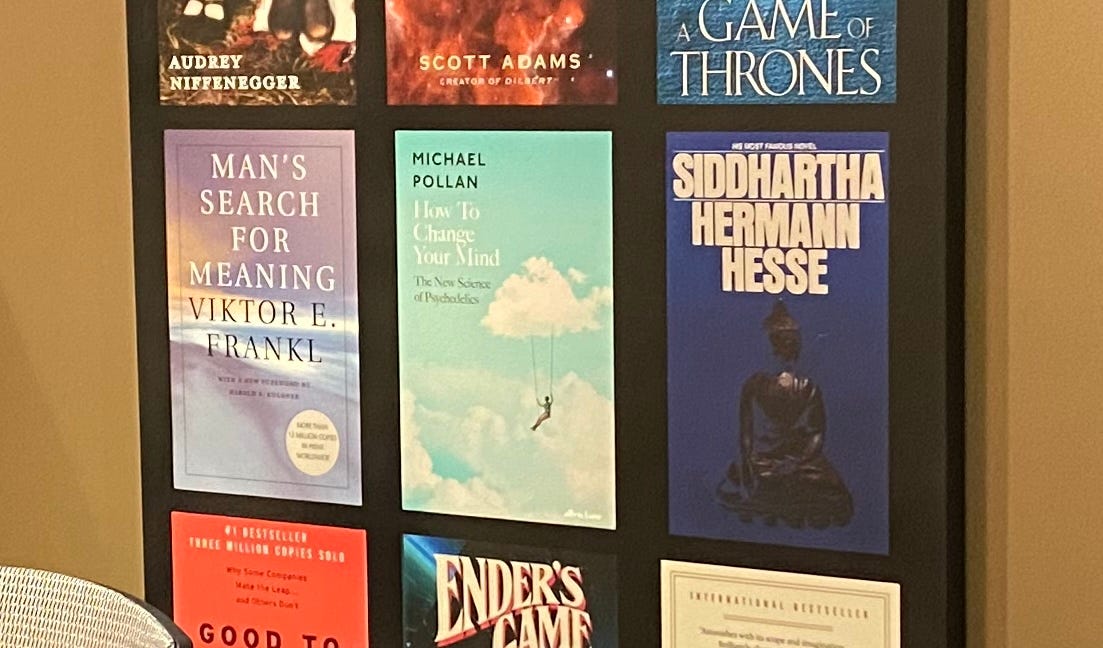
I used to read a lot of popular fiction by authors like Tom Clancy, Ken Follett and John Grisham. There’s nothing like 1000 pages on how to build a cathedral to pass the time while hiding from creditors after a business failure (a story for another day).
Over the years, I’ve come to realize that none of those books stuck with me, regardless of how great they were at helping me kill time. I’ve been on a fantasy and science fiction kick the past decade, based on the theory that even if it’s forgettable, I’ll still be introduced to new worlds and new ideas. I also listen to a lot of non-fiction audiobooks and podcasts.
A few months ago I was going through a bad stretch of books — there being just as many bad writers in sci-fi as any other genre. My favourite authors like Brandon Sanderson and Andy Weir were between series or between novels, and I wanted something new.
Frustrated with my recent choices, I decided to re-read a book series I loved, the Kingkiller Chronicles from Patrick Rothfuss. The final book in the series hasn’t been written, and perhaps never will be, but I remember enjoying the first two books when I read them 15 years ago, and there was a rumour the final book might be ready later this year.
Two sentences into the first book I was hooked and had a magical few weeks of reading on my Kindle before going to sleep each night. Much to my surprise, I remembered only the broad swath of the plot and the memorable final paragraph, and the rest was like reading it for the first time.
When I was a kid, I read a LOT. I would often find myself without a new book to read, but there were a lot of them lying around the house so I would pick them up and read them again. Before downloadable content came along, I re-read many of my books two or three times. By the time I was 30, I had read my favourite novel, Ender’s Game, six times.
I read almost exclusively digital books these days, either audiobooks from Audiobooks.com or ebooks for my Kindle. It has become so easy to buy new books that I’ve gotten into the habit of doing a quick search on Amazon for a new read every time I finish a book.
It’s actually easier to buy something new than to scan my library and read something old for the second or third time. Amazon of course does this on purpose — their stock price doesn’t go up when you read something you already paid for.
But here’s the thing. A great book is MUCH better than a good book.
I’ve now recently re-read Siddhartha by Hermann Hesse and Man’s Search for Meaning by Viktor Frankl. I learned massive lessons from both books when I read them originally, so they weren’t quite as surprising on re-read as Rothfuss’ books, but I was completely engrossed in them and did come out with some new insights.
Heraclitus said that no man ever steps in the same river twice, for it’s not the same river and he’s not the same man. The same is true for a timeless book that has depth and beauty. You’ll have changed by the time you read it again, and so will the world and the book’s place in the world. Your own growth will fuel new discoveries in old content.
Reading the latest thriller from Blake Crouch or James Patterson is a fun way to pass the time, but that book is completely gone from my head a week later. Re-reading an old favourite is just as engaging, but a lot more meaningful.
Imagine if every time you wanted to have a conversation, you had to make a new friend. It’s so much easier and more fulfilling to deepen the relationships you already have. I guarantee you, your most-loved books have more depth to them, just like your most-loved people do.
I’ve decided now that I’m going to make half of my reads repeats, and half will be new material. If I’m lucky, my preferred authors will come out with new pages often enough to keep me fully occupied, although I just quit part way through a crappy 13th book in a mostly-good series about a cranky beer can saving humanity from galactic war. I need better sequels too — are you listening George Martin? Don’t pretend that series is finished, get back to work!
So don’t fall prey to the e-commerce-fueled ease of acquiring new content, and instead spend some quality time with old flames. Take a browse through your reading history, especially of books from decades ago. Those books are relationships you’ve already made, friends you already know and love. And your friends miss you.
Drop by for a visit. They’ll be amazed at how much you’ve grown.
—
Looking back for creativity as well.
To all the magazines I’ve ever loved and written for — inspiration please! — all photos by author
I planned to write a new article today. Something original and clever, not the usual filler. I sat down at my desk and checked — I have 30 drafts in my Medium account, but none of them are catalyzing my creativity or fellating my fancy.
Some of my most popular articles here have been updates of chapters from my book, Zero to Tesla, rewritten to be more useful to the casual reader. So I grabbed an unsold copy, one of many, from my home library, and started flipping through, looking for something interesting.
A few article ideas came to me, Getting Yelled At By Your Boss, Getting Fired for the First Time, and How to Find a Great Job for starters. Then there was How to Get Money from Investors, and How to Tell Your Investors You Lost All Their Money. There’s a theme here, maybe I should start a newsletter.
Then I noticed something beside my stack of unsold autobiographies. A stack of magazines. What are those?
I opened up the top item in the stack and it was an old copy of Wired magazine, from December 1995, almost 30 years ago. Why did I save this one copy of Wired? I looked at the next magazine in the stack and it was an Indian lifestyle magazine called Anokhi. It was twenty years old, and as I flipped through it, I remembered — I used to write a column for Anokhi called “The Wisdom of Wealth.” I wanted to write a column about relationships and dating, but they rejected it, saying nobody wants dating advice from a guy.
“Why don’t you write a column about money?” they asked me.
“Because I’m not rich,” I replied.
“Nobody cares,” they said, “they’ll assume you’re rich if you’re writing a column about being rich and you’re in a magazine.”
So, I had a column. I used to be a writer. It was a hobby. I had completely forgotten.
Press enter or click to view image in full size
Header from my column on money management, way back in the day, when I had no money to manage. Those are $1 bills.
Then I remembered that I had written an article for that issue of Wired and even gotten paid for it, $250. That would be what, $1000 in today’s money? Damn, I must have been good.
Why did I stop writing for so long?
I had been trying to get published as a writer for years, and when I got my first published, paid article, I lost all motivation. Not sure why. I guess I just wanted to prove I could do it.
After my Wired piece in 1995, I came back to writing 10 years later with that money management column, but only lasted a year.
Then 10 more years passed before I started working on my autobiography. It took me four years to complete, and again when I was finished, I lost all enthusiasm for writing.
Most recently, I ended a career arc in philanthropy and was wondering what to do next with my life, and I settled on trying writing again. Going back to something I had enjoyed in the past. Finding inspiration in repetition?
And that’s when it hit me.
It wasn’t the writing I wasn’t interested in, it was the promotion of the writing. I hated sending out proposals to magazine editors and book agents. I hated the thought of whoring myself out on social media to promote my book. In retrospect, I had no problem with the morality of it, I just didn’t know how to be a good social media whore, and I didn’t want to learn.
Now there’s Medium, and Medium is a fascinating place, because although you have to know a bunch of things to get noticed and have your articles read, it’s not nearly as difficult as getting a professional magazine piece published, or getting a book published. You don’t have to be better at promotion than writing, although it still helps.
On Medium I can focus more on my writing. Except on days like today, when I don’t feel inspired. But now I have a trove of past articles I can draw from. There’s some great stuff in my past material, and with some updating, I can republish them now.
Watch out, here I come! New articles with titles like Cats Taste Like Chicken, and How to Pretend to Be Rich. Itching to be updated and tasted.
Come to think of it, once I have a few years of content, I can probably just keep updating and republishing. Who the hell is paying so much attention to me that they’ll notice?
New titles, new pictures, this is a great plan. There’s only so much great advice anyway, and after that it becomes a matter of repackaging and updating to current events and vocabulary, amirite?
Wait. Is that what everyone out there is doing already?
If you’re a writer on Medium, odds are you’ve been writing in some fashion or another for a long time. So if you’re looking for inspiration, take a look at what you’ve written in the past. You’ve become a better writer, haven’t you? Imagine what you can do with that material now.